Build enterprise systems without drowning in platform complexity.
StreamZero gives teams a higher-level model for building actors, handling events, shipping through GitOps, and operating systems that stay structured as they grow.
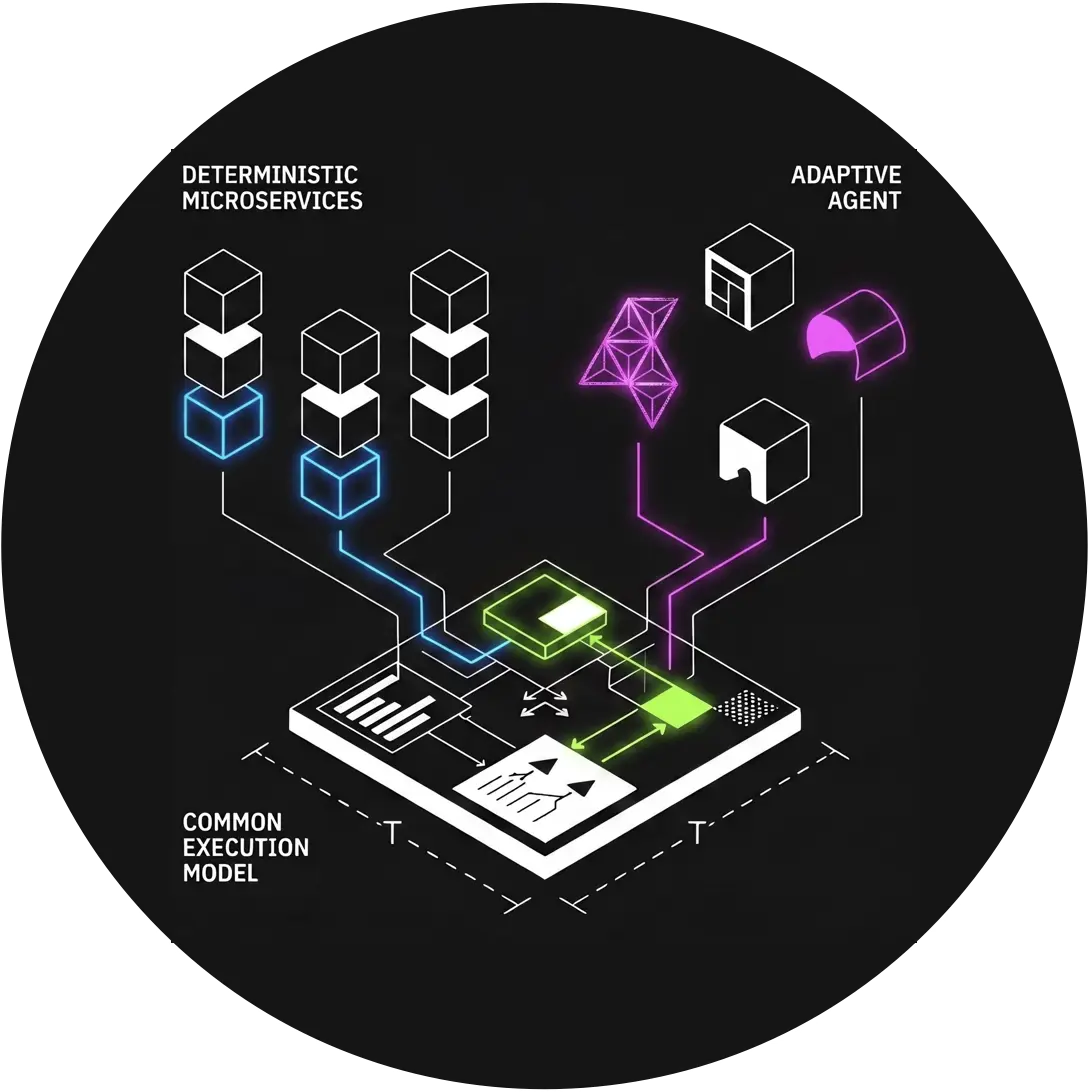
Actors and events as core primitives
Platform patterns above boilerplate
01 — The problem
Why enterprise systems become hard to manage
Enterprise systems need to be reliable and flexible, but teams often pay for that power with fragmentation: too much boilerplate, too many platform decisions, and too much hidden operational load.
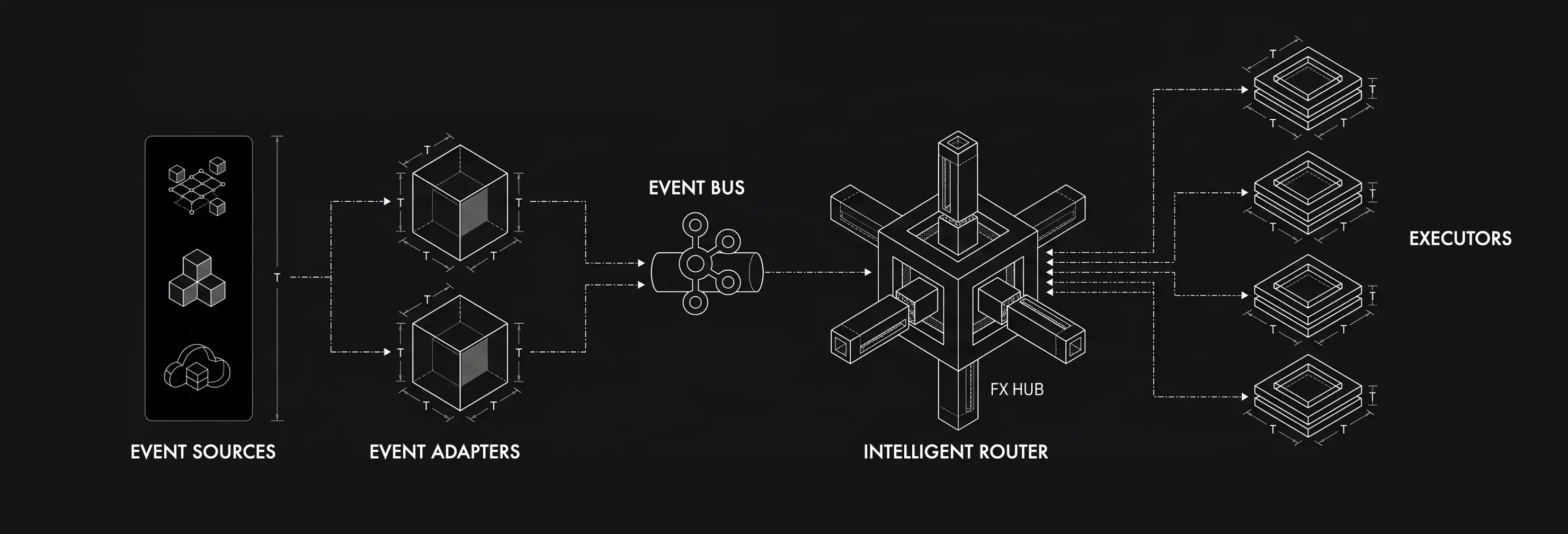
Each new service repeats the same infrastructure and runtime setup.
Teams mix business logic with platform concerns too early.
Deployments, observability, and environment promotion vary by team.
As systems scale, consistency becomes harder than coding the feature itself.
02 — Lifecycle
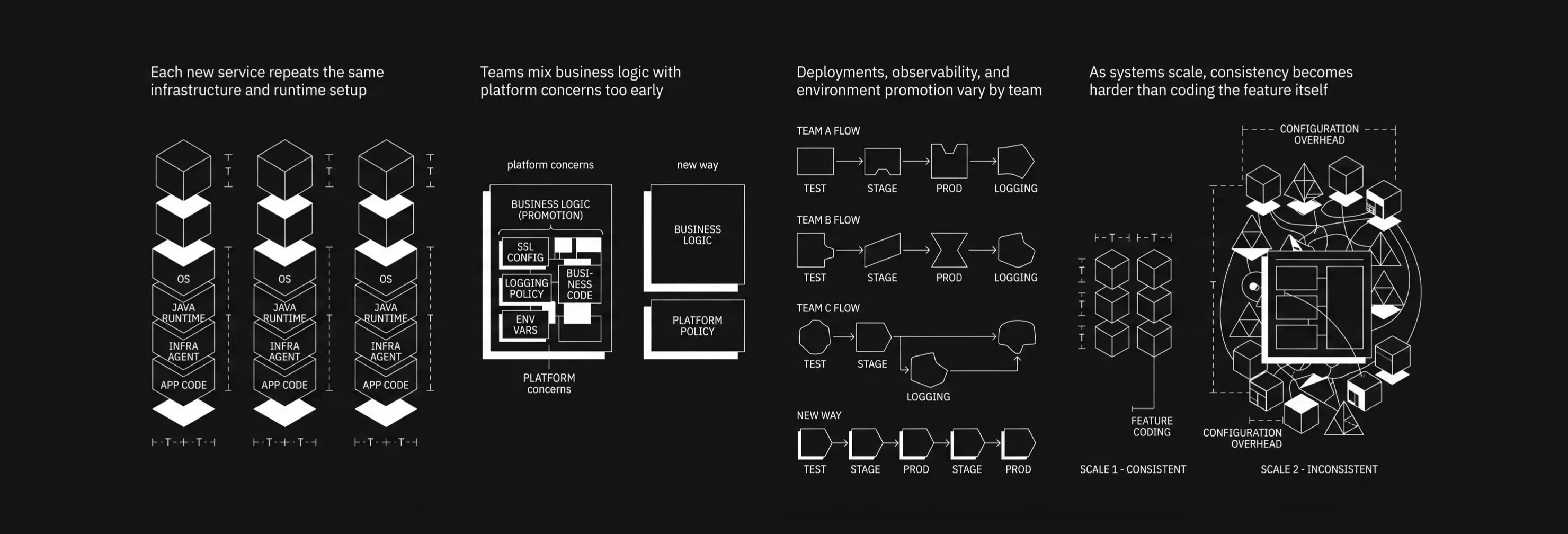
Develop, deploy, monitor — as one operating loop
StreamZero is not only a coding model. It connects the path from implementation to deployment and ongoing visibility, so the operational story is part of the platform.
Develop
Teams define actors and event flows using structured platform abstractions rather than raw infrastructure wiring.
Deploy
Changes move through a governed delivery path, keeping releases reproducible and easier to reason about.
Monitor
Runtime visibility stays connected to the same operating model, helping teams understand behavior after release.
03 — Core model
Actors and events as the main building blocks
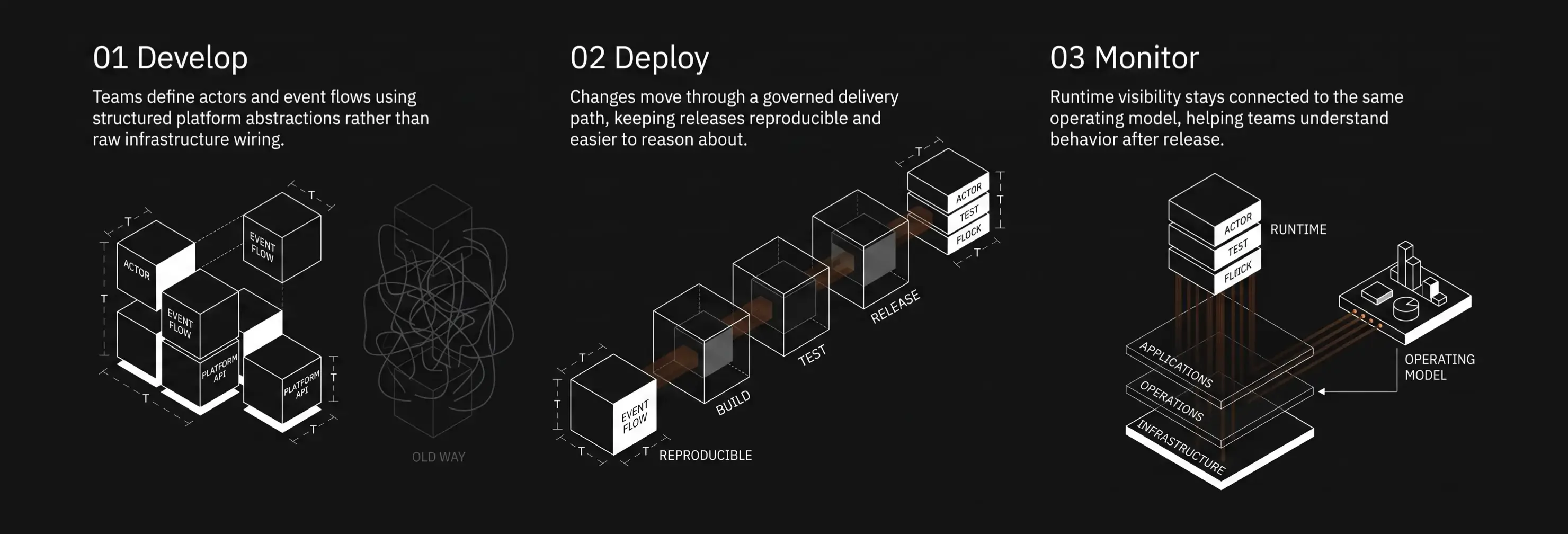
StreamZero centers development around event-driven actors. Teams define behavior at the business level, while the platform shapes that behavior into repeatable runtime patterns.
Actors
Actors encapsulate business capabilities. They react to events, hold the logic that matters, and expose a clearer mental model than assembling low-level infrastructure by hand.
Events
Events become the language of coordination. They connect flows across the system without forcing teams to wire every interaction manually.
Structured execution
The platform keeps runtime behavior consistent, so teams can move faster without producing a new variant of architecture every sprint.
04 — Platform library
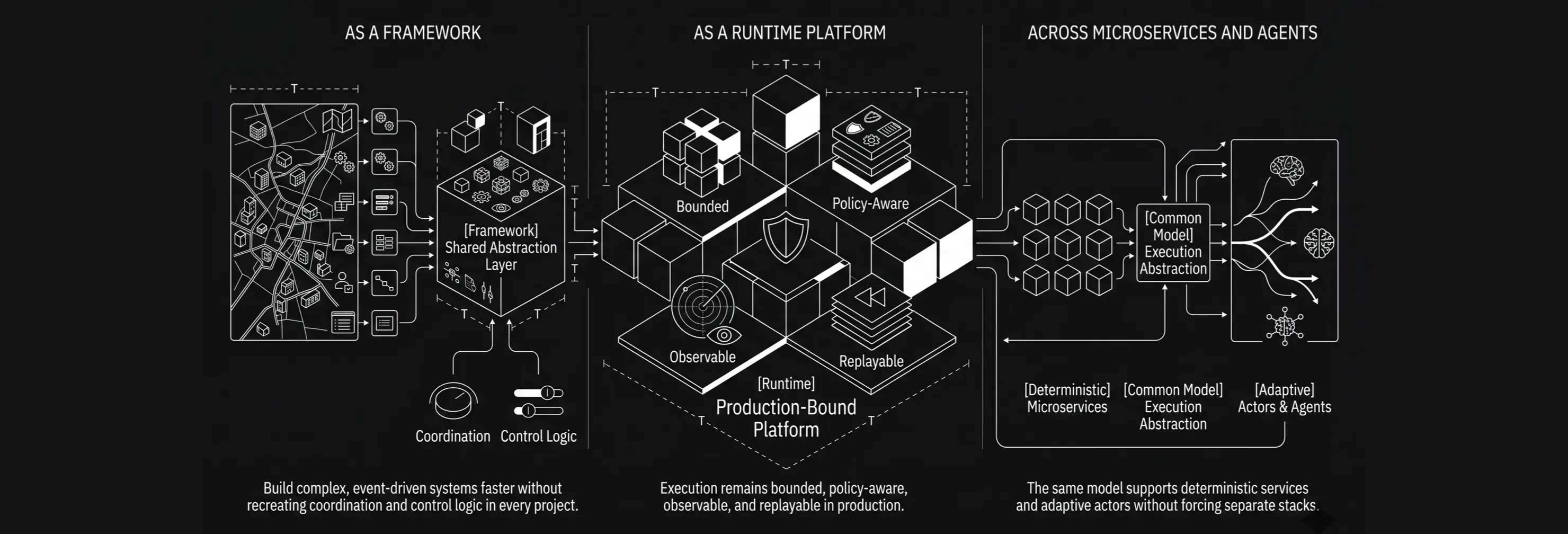
Developers work above the boilerplate layer
Instead of starting with infrastructure scaffolding, teams work with a higher-level platform surface from day one. StreamZero brings core runtime capabilities into a single library, keeps service and agent setup structured through manifests, and can generate lightweight micro-UIs where needed. The result is a faster path to production-ready components with less custom plumbing.
Core capabilities like events, logging, config, secrets, state, and retries are built into a single developer library.
Agents and services are defined through structured manifest files rather than ad hoc configuration.
JSON-based form generation can create lightweight operational interfaces where needed.
Teams start from consistent patterns instead of rebuilding the same operational foundations each time.
Teams spend less time recreating boilerplate and platform wiring.
Developers can understand and contribute without learning a different setup for every service.
Services, flows, and environments follow clearer shared patterns.
Teams spend more time building business capability and less time on plumbing.
05 — AI-assisted development
Designed for a world where developers build with AI
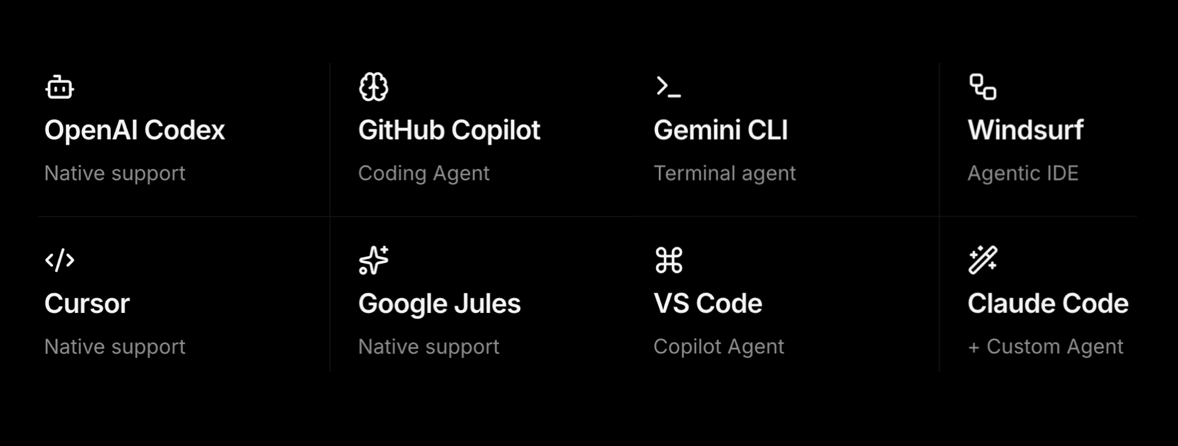
Because the platform gives development a clearer structure, it also becomes easier to use with AI IDEs, reusable skills, and MCP-style tooling that can work against well-defined patterns.
Practical effect
StreamZero follows the AGENTS.md standard – an open format for guiding AI coding agents, used by 60,000+ open-source projects and stewarded by the Linux Foundation. One configuration file provides your entire AI toolchain with project conventions, code patterns, and best practices.
ZeroOps - DevOps built into the platform
With StreamZero, DevOps is part of the platform itself. The result is ZeroOps: teams can operate services day to day without relying on continuous DevOps support. That same structure also makes StreamZero well suited to AI, because AI performs best in systems that are consistent, explicit, and governed by clear patterns.
Developers can push code to Git to release changes onto the platform, with approvals and governance handled directly through Git-based workflows.
Services and service flows are organised as distinct projects, each with its own team structure, administrators, and permission model, so ownership stays clear as systems grow.
Teams can update service settings by committing configuration files to Git, without needing to log into a separate user interface or depend on manual operational steps.
Designed to scale at the platform level
StreamZero is designed to scale at the platform level, so high-volume execution is handled as a core capability rather than added later. Events are routed, workloads are distributed, and infrastructure is scaled in a way that keeps throughput high, recovery reliable, and critical work moving.
Kafka-based event routing
StreamZero routes system events through Apache Kafka, giving the platform a durable backbone that can handle very high message volumes.
Smart workload routing
Events that trigger agents or microservices are routed through the gateway, which launches work into containers for efficient parallel execution.
Parallel scaling in containers
Execution environments can scale up as demand grows, allowing many workloads to run at the same time without reducing throughput.
Execution with fast cleanup
After a service finishes, its environment is cleared down so new work can take its place quickly and efficiently.
Recovery and priority control
Sequenced messaging allows flows to be replayed or retried, while priority queues help important jobs move first and prevent bottlenecks.
Multi-zone infrastructure scale
Executors, gateways, and supporting infrastructure run on Kubernetes, making it possible to scale across data centres and network zones as needed.
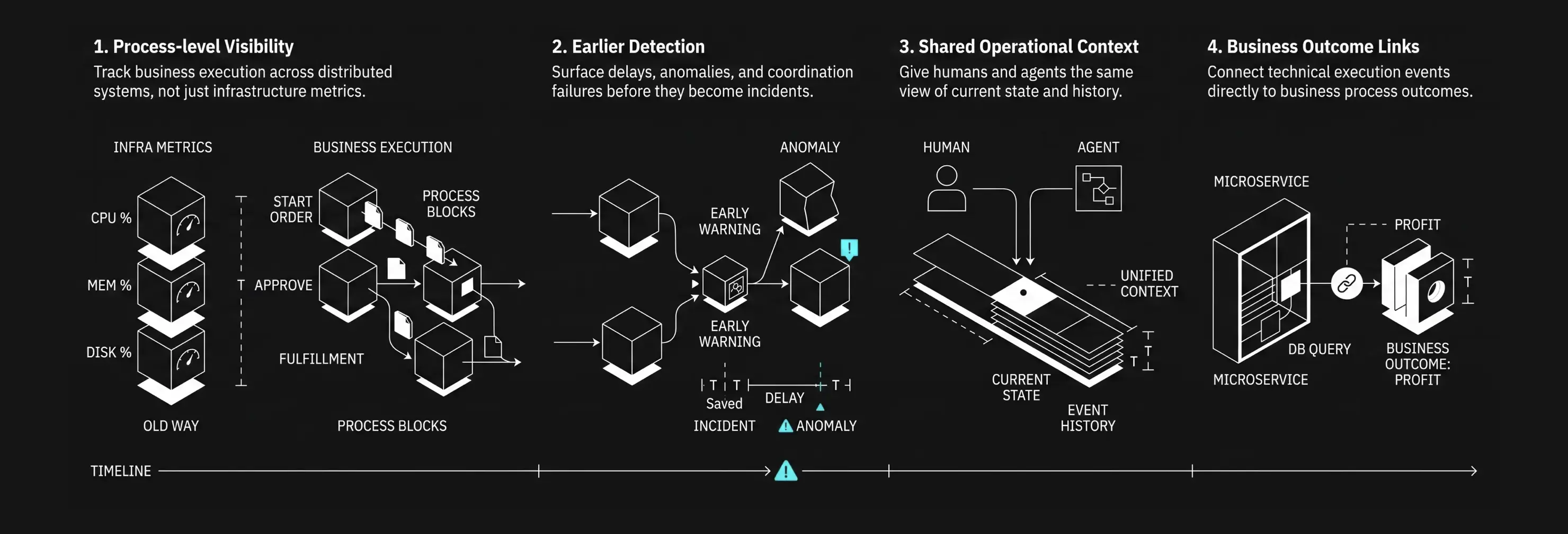
See the business in motion, not just the infrastructure underneath it
Most organizations can observe servers, services, and traces. Far fewer can observe a real business process as it moves across systems, approvals, exceptions, and adaptive decisions. Better observability is not only an operations benefit. It is also a delivery and cost benefit.
Process-level visibility
Track business execution across distributed systems, not just infrastructure metrics.
Earlier detection
Surface delays, anomalies, and coordination failures before they become incidents.
Shared operational context
Give humans and agents the same view of current state and history.
Business outcome links
Connect technical execution events directly to business process outcomes.
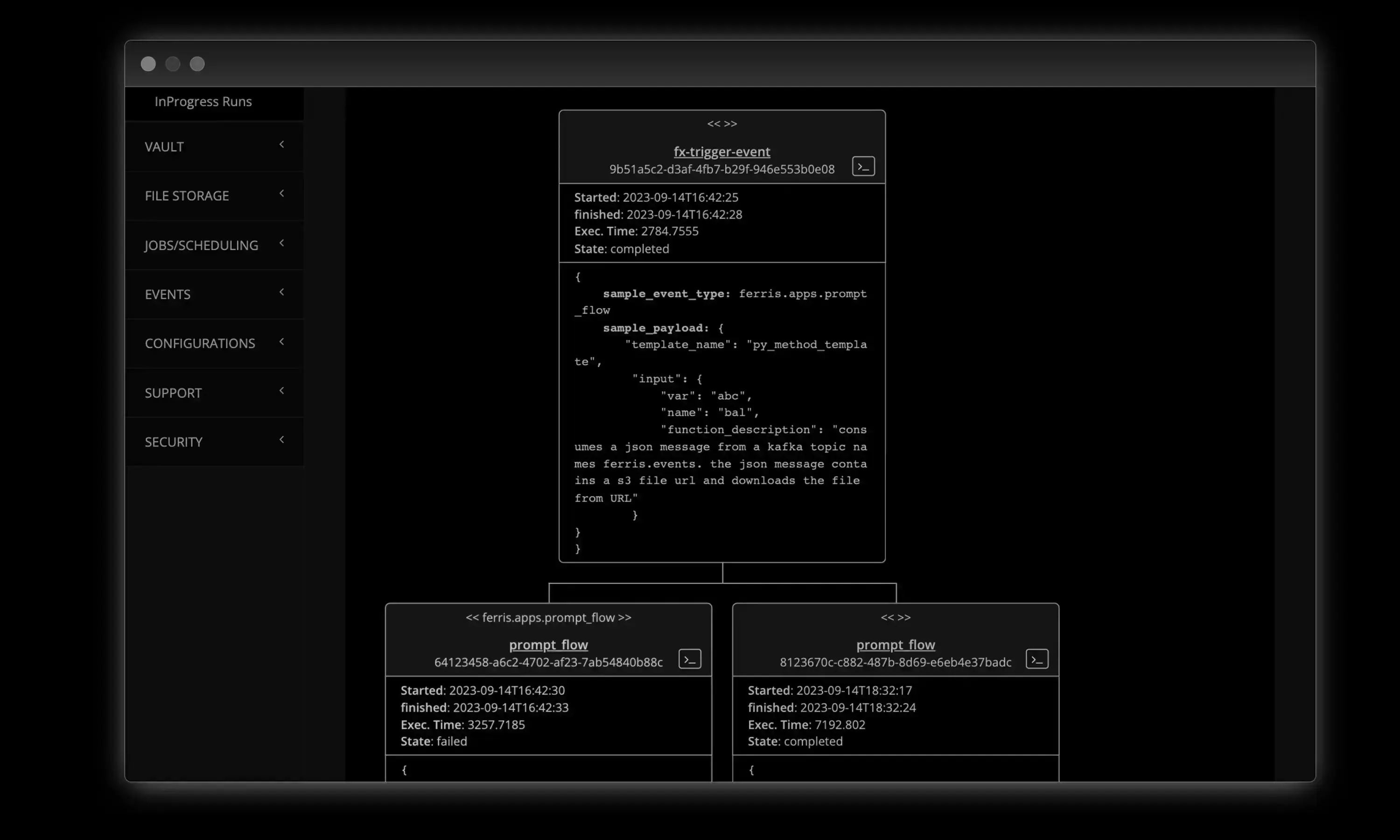
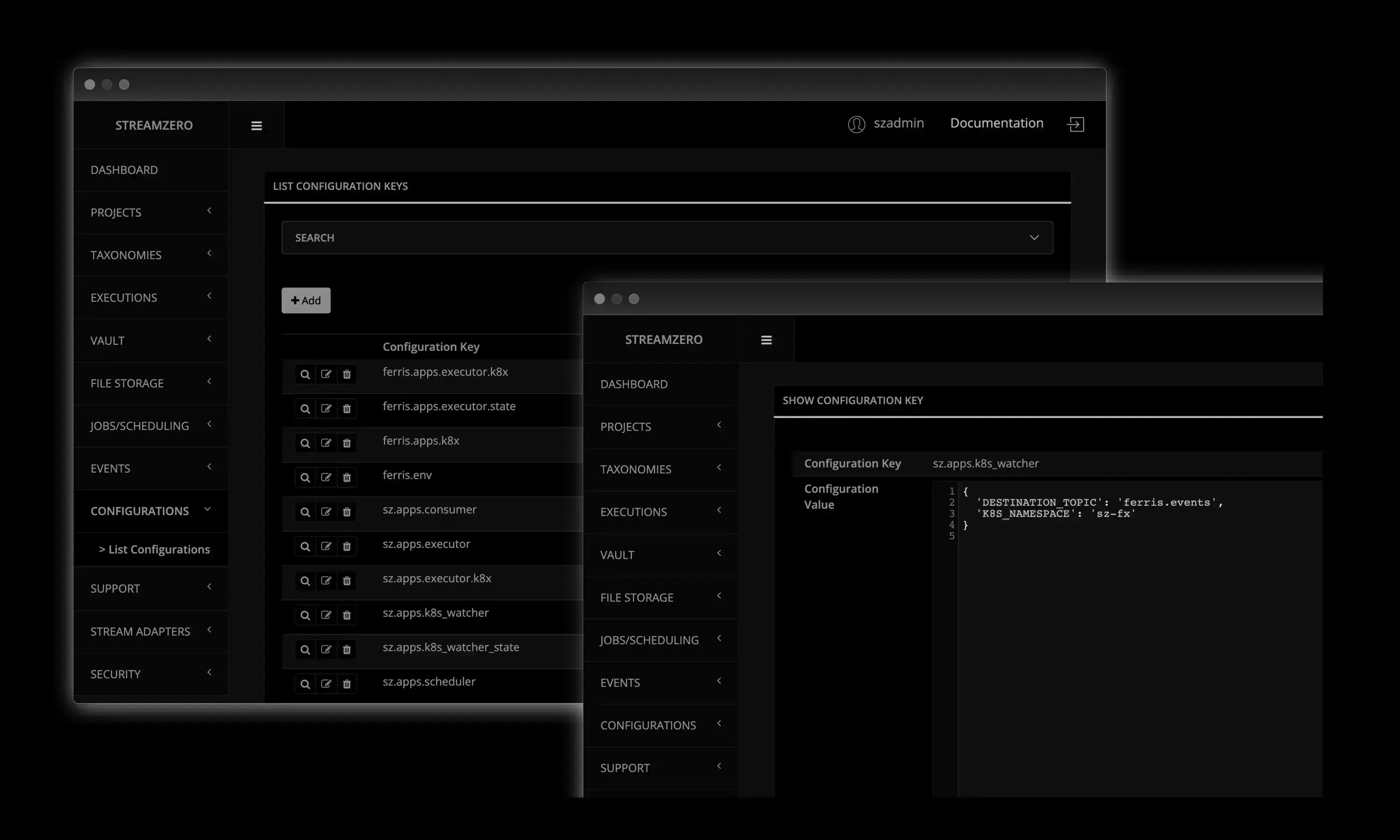
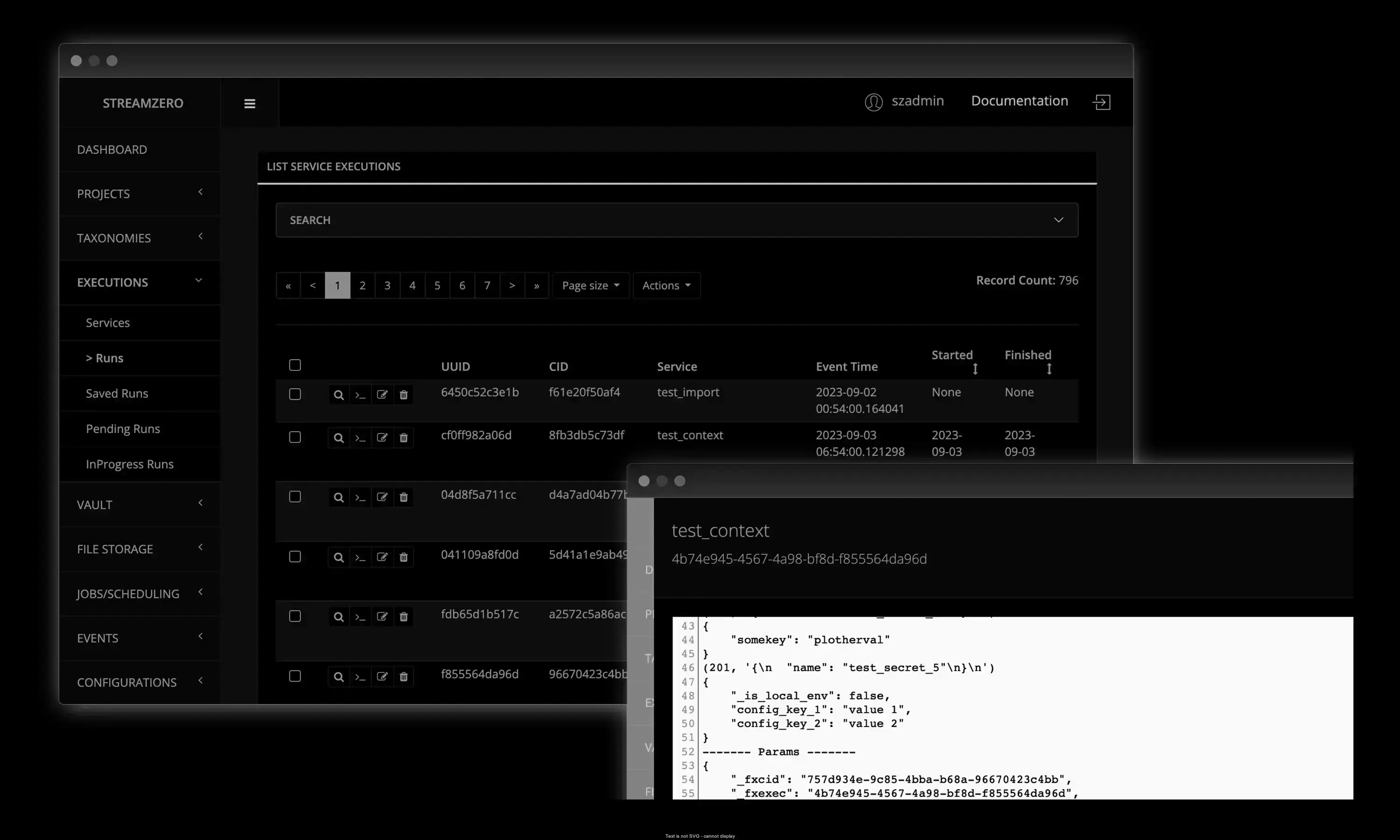
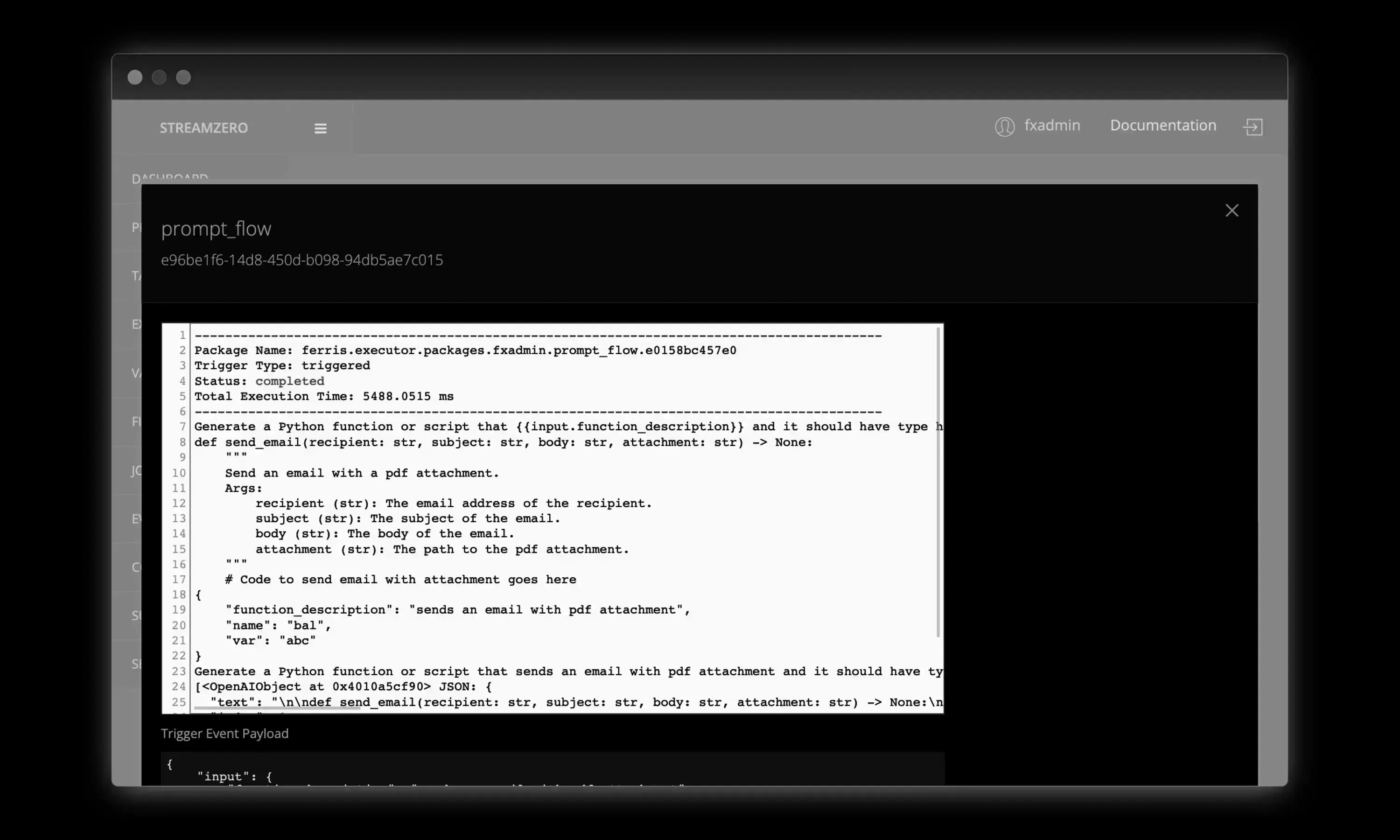
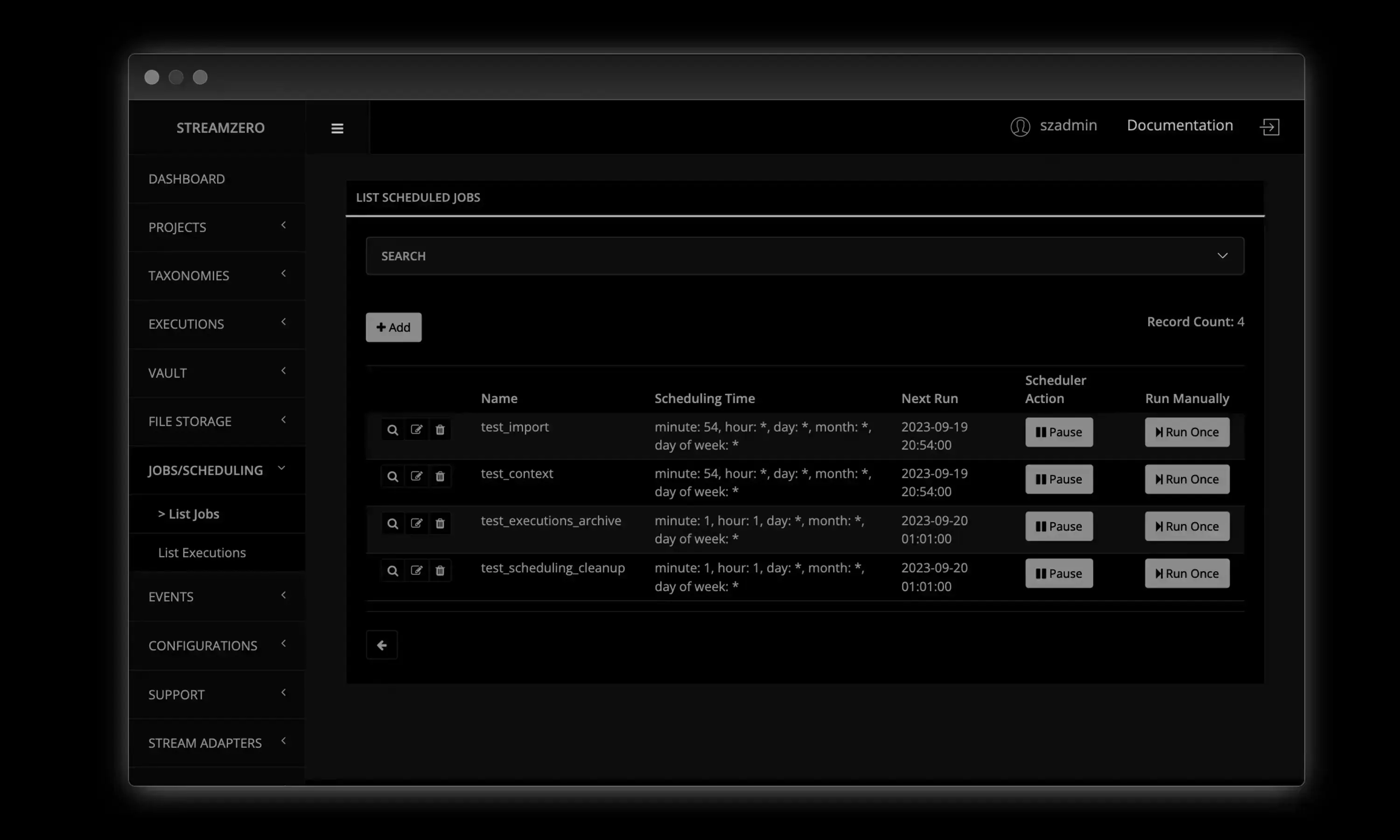
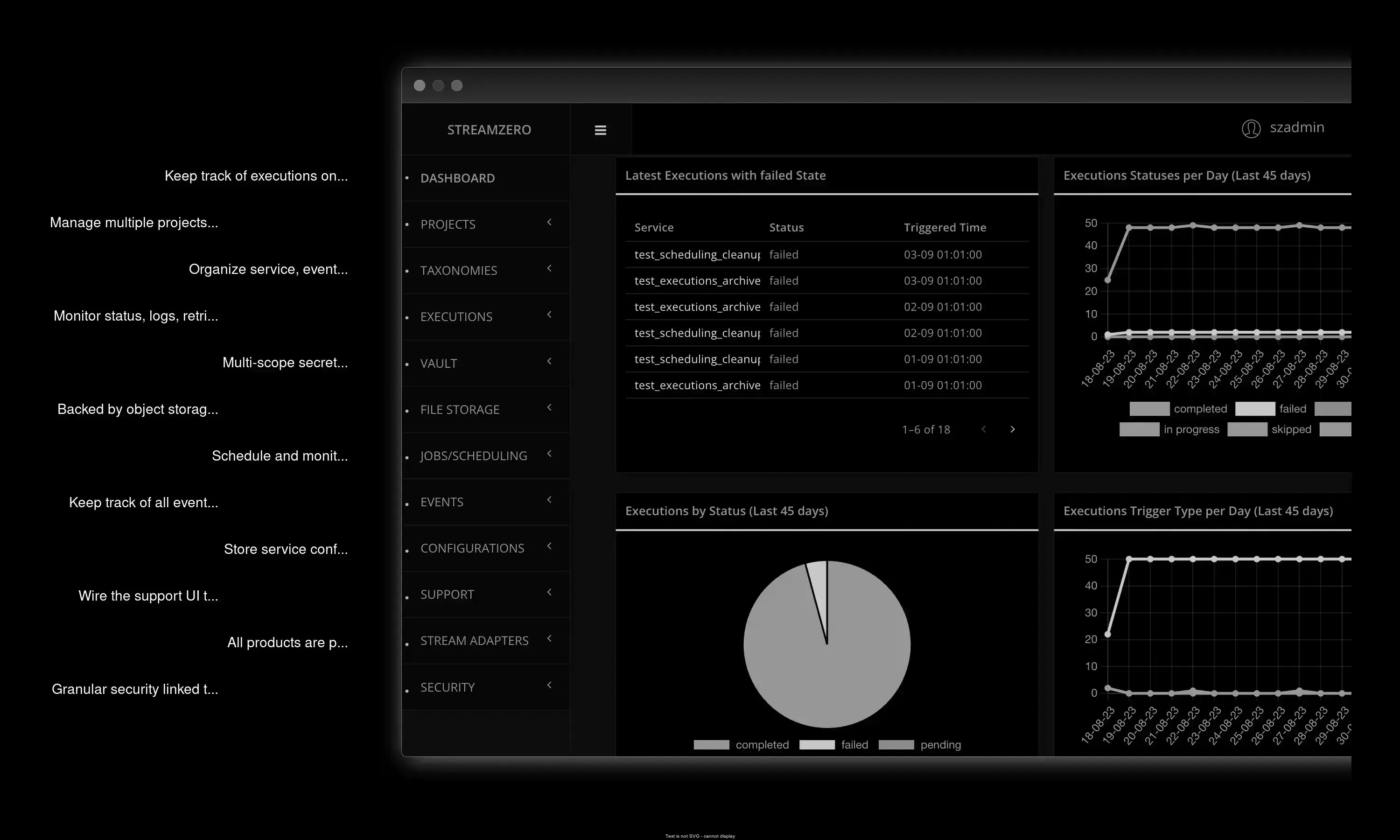
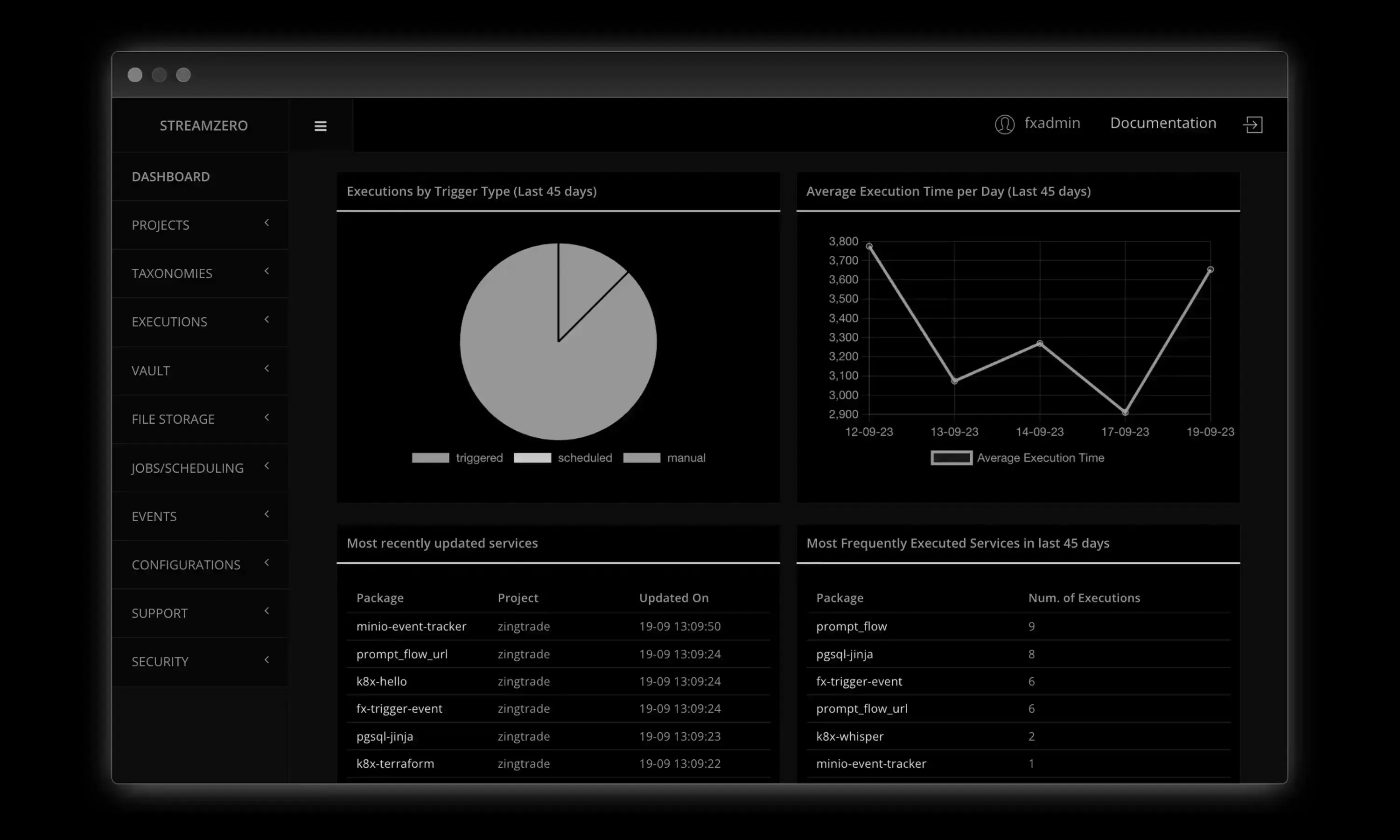
Dashboard View
06 — Why it matters
A cleaner path from idea to operated system
StreamZero helps developers move faster, platform teams enforce consistency, and technology leaders reduce the cost of architectural sprawl.
For developers
Less setup. Clearer patterns. More time on product logic.
For platform teams
More consistency, more governance, fewer custom paths.
For leaders
Better scalability of delivery without multiplying operational complexity.
StreamZero is an operating model, not just a framework
Design event-driven systems with clear patterns, ship through GitOps, and keep delivery and operations aligned as your platform grows.
Ready to see how StreamZero fits into your enterprise stack? Book a working session with our team.